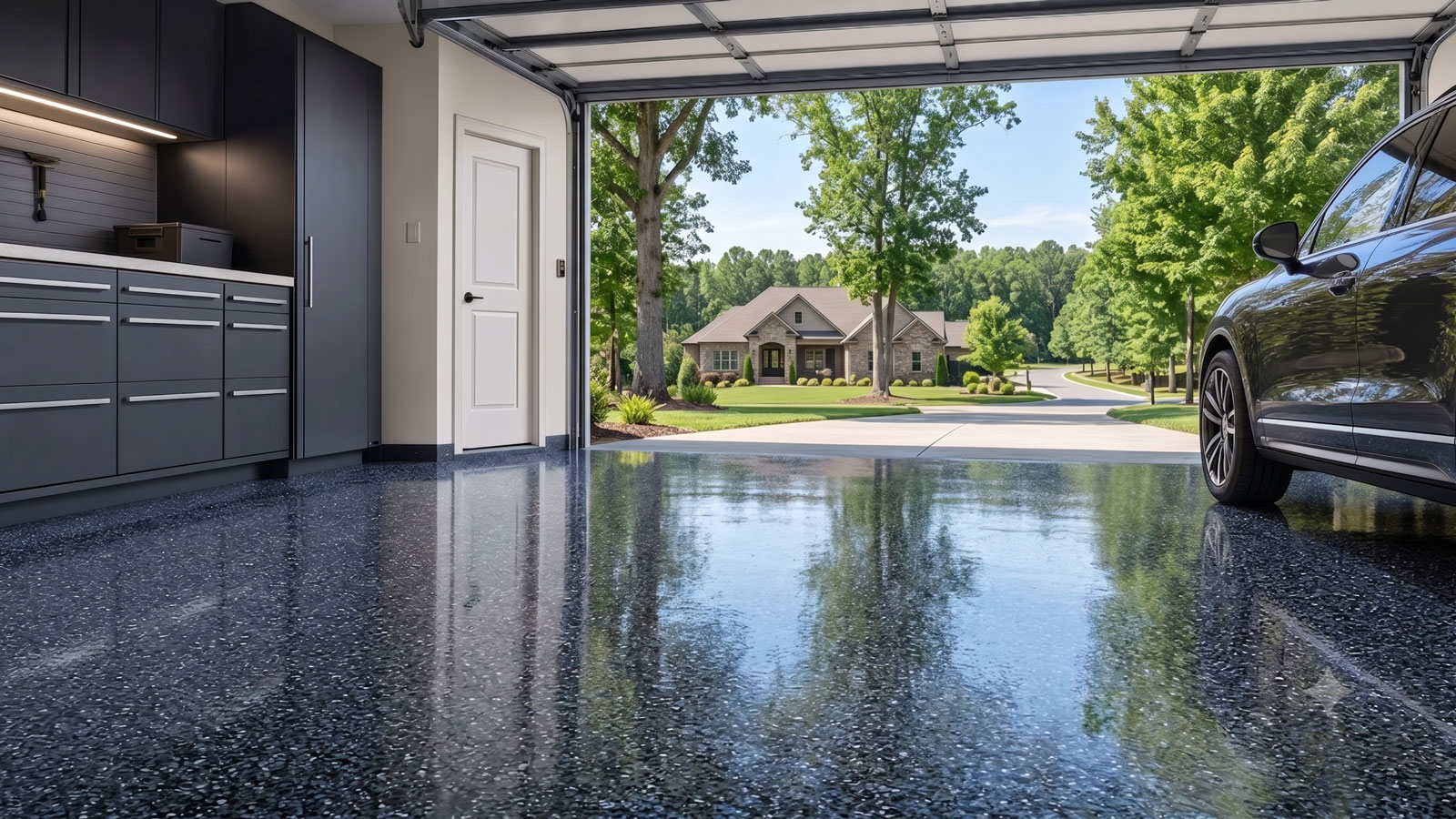
Garage Floor Coating in Great Falls, VA
Garage floor coating guidance for Great Falls, VA homes, larger garage spaces, and premium residential finish considerations.
Floor Coating Services in Great Falls
Great Falls has a distinct garage-floor context among Northern Virginia service areas because large wooded residential lots and extensive private driveways are common features of its landscape. This area of Fairfax County falls within the Dranesville planning district near the Potomac River and Great Falls Park, but public conservation and river maps do not date concrete floors in private detached garages. A workshop built later on a large lot might have entirely different surface treatments from the garage attached to the main house.
Water and access need to be considered separately. Great Falls-area terrain can include slopes, retaining edges and drives that approach garages from above or below grade. Potomac River and stream planning are genuine regional concerns, but proximity to the park or river does not establish flooding or slab moisture at a home. Inspect downspout outlets, the actual doorway grade and any persistent water marks before planning a coating.
Epoxy, polyaspartic and decorative-flake finishes may help maintain a sound concrete floor, but only after old paints, patches, cracks and surface contamination are assessed. A long approach, detached structure and limited work staging can change labor. A resin finish is not a drainage repair or an answer to actively moving concrete.
Local Market Insight
Great Falls sits in Fairfax County's Dranesville area near the Potomac River and Great Falls Park. Large residential lots, wooded approaches and detached garage or workshop arrangements can affect access, concrete history and runoff pathways without implying any private floor is damaged.
What Affects the Cost of Garage Floor Coating in Great Falls?
Grinding equipment delivered to a detached Great Falls outbuilding through a long or narrow drive may require different staging from work in a close-attached two-car garage. Prior epoxy, paint, oil and multiple pours can also alter preparation.
Potomac-side geography is a useful planning backdrop but cannot determine garage-floor moisture. A bid should separate actual grade or drainage problems, if any, from stripping, profiling, cracks, joints and finish selection.
- Main home versus accessory building: Great Falls lots can include detached workshops or later additions. Determine which slab sections are original, repaired or repoured, and whether existing paint or sealers affect the planned installation.
- Old coatings and workshop use: Garage floors may have oil from equipment, paint, clear treatments or patches that impede adhesion. Ask how the installer will remove interfering films and grind to the required profile.
- Slope, wooded lot and runoff: River and park boundaries are not moisture tests. Trace actual rainwater from roof, landscaping and drive to the garage, especially where the door sits below an uphill approach.
- Cracks and structural movement: A stable crack or patched doorway can differ from movement at a slab joint or settlement. Do not expect a topcoat to stabilize a structural defect; request the correct repair boundary.
- Equipment and waste logistics: Gates, long drives, gravel segments and detached structures can complicate delivery of grinders, dust collection and debris removal. These should appear in the labor scope.
- Traction and usable cure: Wet shoes, yard debris and winter grit affect desired finish texture. The bid should describe compatible layers, temperature requirements and when cars or equipment can return.
Call for a clear, project-specific estimate — or request one online.
Great Falls's Detached Garages and the Limits of House-Age Assumptions
Great Falls is a residential area in northern Fairfax County with a different property pattern from Reston's clustered neighborhoods or DC's alley garages. Its landscape near Great Falls Park and the Potomac includes wooded lots and private approaches. These geographic characteristics are relevant to access, but they do not establish that a homeowner's concrete is old, damp or otherwise unsuitable.
A house might have an attached garage with concrete poured during the original construction and a detached workshop added decades later. Either floor could have been repainted, resurfaced or patched. Inspect oil contamination, sealer, old epoxy, crack fillers, surface hardness and differences in pour texture rather than relying on the property's architectural style.
Long access routes can be a meaningful cost factor. Grinders, coating materials, dust control and waste must be transported safely to the work area. If a driveway has gates, steep turns or unfinished segments, clarify staging before approving a quote. The contractor should separately define old-coating removal, mechanical profiling, stable crack repair and joint treatment.
Decorative flakes and durable resin topcoats may create an attractive cleanable finish once the base is ready. They will not repair active settlement or adhesion failure beneath earlier coatings. Great Falls homeowners should insist on a concrete-specific plan rather than assume every large residential garage receives the same standard treatment.
Potomac Geography, Great Falls Driveways and Actual Water Entry
Great Falls is widely associated with the Potomac River, but the proximity of a household to the river or park is not a reliable way to diagnose a private garage. Water pathways are determined by the actual drive, slope, roof drainage and building threshold. Some properties may be on higher ground, while a particular uphill drive can direct surface water toward a door regardless of the regional river setting.
At the garage, inspect gutters, downspouts, any drain channel and evidence of prior water entry near the overhead door. A dark area or peeling previous coating may warrant further investigation if it persists during dry weather. Ordinary puddles from parked vehicles, runoff entering under the door and moisture moving through the slab must be treated as separate conditions.
A working garage on a wooded property may also receive yard debris, mud and winter deicing grit. A continuous bonded coating can make sweeping and cleanup easier, but no finish removes the need for maintenance or prompt removal of standing liquids. Discuss traction if wet boots and workshop use are regular concerns.
If rainwater crosses the threshold, correct the grade or drainage first. If the slab itself has moisture indications, assess them according to the selected coating system. After confirming suitability, define film removal, grinding, repairs, primer, decorative layers, topcoat and vehicle-return timing. That sequence gives property-level meaning to Great Falls's local terrain without inventing a floor defect.
Frequently Asked Questions
Does a Great Falls house with a long driveway need special coating?
Not automatically. The driveway can affect access and runoff, but concrete preparation depends on the actual floor. Have equipment staging, old finishes, patches and cracks inspected.
Does Potomac River proximity mean my garage has moisture?
No. River geography cannot measure a private slab. Check real water-entry history, the driveway's slope, gutters and persistent damp patches before specifying any moisture investigation.
Can polyaspartic stop runoff from an uphill driveway?
No. Drainage or threshold corrections are separate work. A finish cannot redirect outside water or repair serious slab movement.
What should a Great Falls garage quote specify?
Ask about access through gates and drives, surface stripping and profiling, crack and joint treatment, doorway edges, warranted moisture assessment, complete layers, texture and return-to-parking time.
How should workshop dirt and winter grit be maintained?
Sweep abrasive debris and remove water regularly. A sound finish may make cleaning easier than unfinished concrete, but workshop and seasonal contamination still require care.
Great Falls Neighborhoods & Local Context
Phone Quote Line
Talk through the floor condition, coating options, and practical pricing range for your project.
(571) 500-4090Typical Project Cost
$3,000–$5,500
$3,000–$5,500 for a typical two-car garage. Final pricing depends on floor size, concrete condition, prep work, coating type, and finish options.
Other Service Areas