Garage Floor Coating in Vienna, VA
Garage floor coating guidance for Vienna’s single-family homes and premium Northern Virginia residential garages.
Floor Coating Services in Vienna
Vienna has garage-floor requirements shaped by an established town center, older residential streets and later home additions rather than a single uniform suburb. The Town of Vienna is revising its Comprehensive Plan in 2026, with a Planning Commission draft under Town Council review; the draft is not yet the same as an adopted update. That distinction matters when describing development. An older house can have a garage that was later built or repoured, while a newly finished slab can retain sealer, curing compounds or previously applied paint.
Water management is also specific to the property's setting. Vienna's parks, stream corridors and maintained municipal drainage network provide public context, but neither a plan map nor a nearby stream establishes moisture in a private garage. A sloped driveway or roof downspout can bring water toward the door even where the neighborhood itself is not flood-prone. Check threshold staining and concrete conditions rather than assume a regional problem.
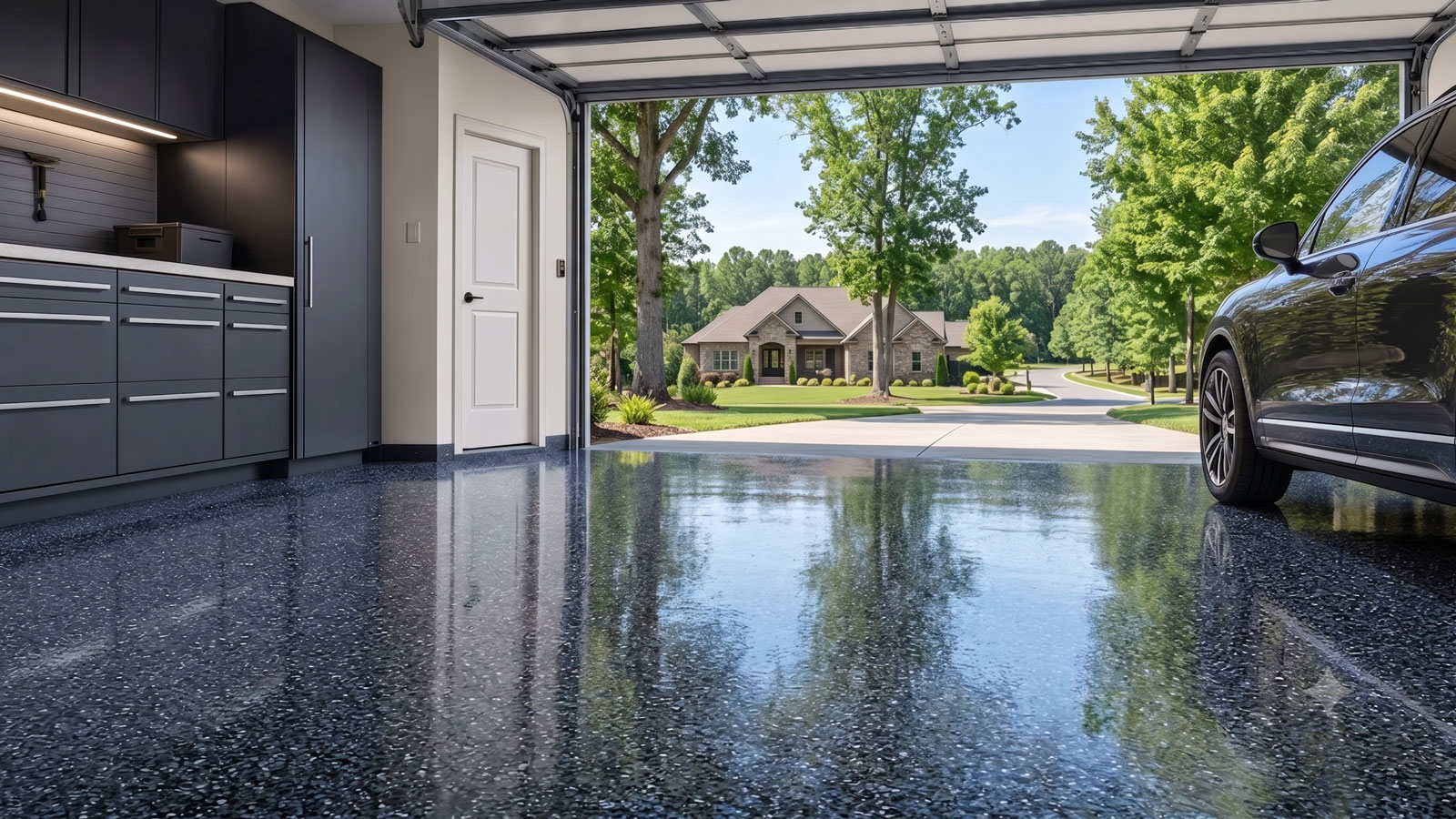
Once an installer verifies concrete soundness and the necessary surface profile, epoxy, polyaspartic and decorative flake are options for easier cleaning. The quote should address old coatings, stable cracks, moving joints, access and when the household can park inside again. A resin finish cannot resolve drainage or structural movement.
Local Market Insight
Vienna's 2026 Comprehensive Plan update is under review rather than a completed replacement at this checkpoint. Its established town fabric, evolving planning proposals and property-specific driveway grades require actual concrete and drainage inspection, not assumptions from a draft.
What Affects the Cost of Garage Floor Coating in Vienna?
A garage beside an older Vienna home can carry years of floor paint or a later replacement pour, while an attached bay in newer housing may still need curing-sealer removal and joint detailing. Preparation and equipment access change cost.
Town drainage planning does not measure moisture beneath concrete. Ask for any outside water correction, substrate assessment, grinding, repairs, finish layers and vehicle-return instructions to be separated in the quote.
- Older homes and changed garages: Vienna's residential buildings can include additions and replacement slabs. Inspect actual concrete textures, past repairs and visible coatings rather than assume the floor shares the house's original age.
- Paint, oil and surface sealer: Prior paint and automotive residue can interfere with bonding; recent concrete may retain sealers. Specify removal, cleaning and mechanical profiling suited to the proposed system.
- Driveway and roof runoff: A draft plan and drainage map do not diagnose a home's garage. Examine gutters, the final driveway slope, old water marks and persistent concrete dampness before selecting resin layers.
- Cracks and functioning joints: Door-edge wear, stable cracks and joints that move require different treatments. An estimate should distinguish ordinary patching from more serious deterioration.
- Compact lot staging: Narrow residential drives, storage, steps and paved transitions can affect equipment access and perimeter preparation. Discuss where vehicles will be left during curing.
- Wet traction and cure timing: Winter deicing grit and rainwater can make a very smooth finish inconvenient. Compare texture, layering and the manufacturer's installation and return-to-parking requirements.
Call for a clear, project-specific estimate — or request one online.
Vienna's Evolving Plan and the Real Age of a Garage Slab
Vienna's 2026 planning process seeks to update the town's long-range roadmap covering land use, transportation, community facilities, parks and sustainability. The Planning Commission draft remained under Town Council review, so proposed policy should not be described as completed development. That public process documents an established community considering future change; it does not establish whether a homeowner's garage floor has been rebuilt.
An older Vienna home may have received an attached garage or replacement concrete years after the residence was first constructed. Another floor can show prior oil stains, paint, crack filler or uneven edges. Even a newer garage may need mechanical grinding because curing compounds or clear sealer interfere with adhesion. Inspect the specific floor rather than assuming an apparently smooth slab is ready to coat.
Contractor access can also matter on compact lots. Existing storage, machinery clearance, steps, floor drains and the location of household parking may influence preparation time. A detailed scope should say what films will be removed, how cracks and control joints are handled and what profile is needed before coating.
Epoxy, polyaspartic and flake are only useful options once the substrate is sound. A premium-looking finish does not repair moving concrete or compensate for grinding omitted from the bid. Vienna homeowners should be able to compare full preparation plans and realistic curing schedules.
Vienna Driveways, Seasonal Rain and the Difference Between Runoff and Slab Moisture
Vienna's comprehensive planning considers environment, parks and public infrastructure, including drainage decisions across an established town. Yet a municipal plan cannot show whether any particular garage takes runoff. Individual driveway elevations, pavement settlement and the placement of roof drains matter more directly to the floor.
Walk the site when rain is expected or examine marks left by earlier storms. Does the drive pitch toward the overhead door? Does a downspout discharge beside the entrance? Is there old paint blistering on one side of the slab? Exterior water entry and moisture moving through concrete require different evaluation, and neither should be confused with temporary puddles deposited by a wet vehicle.
Garages throughout Vienna also accumulate road salt, tracked dirt and slush in winter. An intact, well-bonded finish can be easier to sweep than bare porous concrete, but maintenance still includes removing standing liquid and grit. Ask about texture where household members regularly enter with wet shoes.
If runoff is entering, correct the outside source before coating. If persistent slab dampness is suspected, use the proposed resin system's moisture-compatibility requirements. Then identify old-film removal, grinding, stable crack work, complete layer sequence, finish texture and safe return-to-use time. The town's ongoing plan is useful context, not a substitute for site inspection.
Frequently Asked Questions
Has Vienna's 2026 plan already changed the condition of local garages?
No. A proposed comprehensive plan guides possible future decisions; it does not establish completed construction. Existing garage floors require direct inspection regardless of planning status.
Is an older Vienna home's garage slab necessarily old?
No. Garage floors can be added or repoured later. Inspect old paint, patches, joints and the actual substrate before determining coating preparation.
Can polyaspartic prevent water entering from the driveway?
No. Outside grade, roof drainage or threshold issues need separate correction. A coating is not a substitute for managing stormwater.
What should my Vienna garage estimate include?
Ask for existing film removal, concrete profiling, crack and joint details, edge work, moisture checks where warranted, all resin layers, traction and manufacturer-based parking return.
Will a new garage finish eliminate winter cleaning?
No. Salt, grit and slush must still be removed. A sound coating may make that routine easier, but it is not maintenance-free.
Vienna Neighborhoods & Local Context
Phone Quote Line
Talk through the floor condition, coating options, and practical pricing range for your project.
(571) 500-4090Typical Project Cost
$3,000–$5,500
$3,000–$5,500 for a typical two-car garage. Final pricing depends on floor size, concrete condition, prep work, coating type, and finish options.
Other Service Areas