Garage Floor Coating in Ashburn, VA
Practical garage floor coating guidance for Ashburn homeowners. Epoxy, polyaspartic, decorative flake finishes, and preparation considerations for Northern Virginia concrete.
Floor Coating Services in Ashburn
Ashburn's garage floors reflect a rapidly changing part of eastern Loudoun County rather than a single generation of suburban concrete. Loudoun's 2019 General Plan, amended by the Board of Supervisors in January 2026, distinguishes suburban place types and housing patterns across the county. Broadlands, Ashburn Village and newer communities near the Dulles corridor can have garages from different building periods. A recent attached bay may retain curing sealer, while an older floor may have paint, patchwork and years of vehicle residue.
Drainage is a second local concern with its own evidence. Loudoun documents the Broad Run watershed as draining into the Potomac, and streams such as Beaverdam Run connect developed neighborhoods to a larger system. These watershed facts do not mean an Ashburn home is flood-prone or that concrete in a specific garage is moist. The driveway slope, downspouts, threshold and slab need to be checked separately rather than inferred from a map.
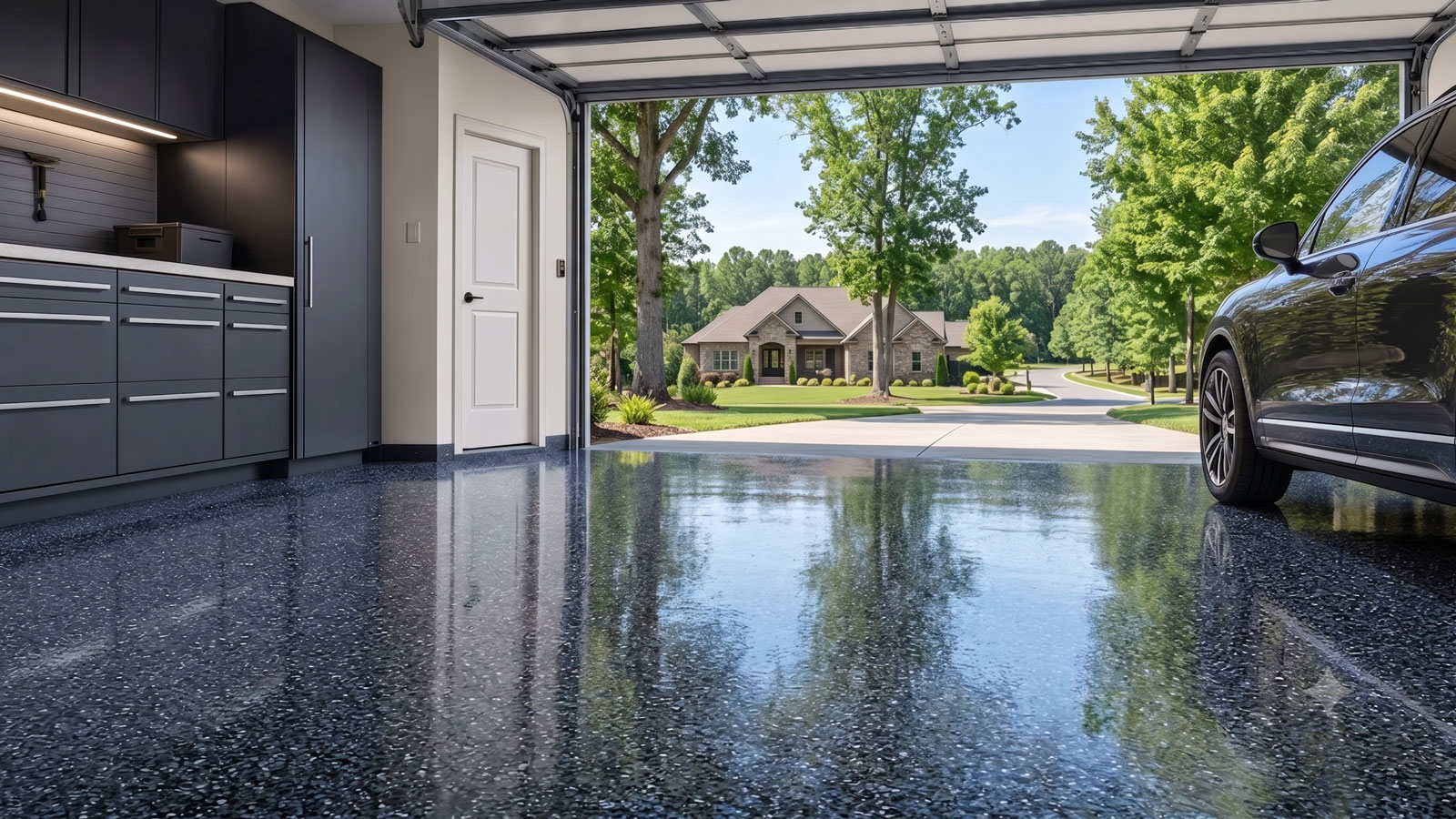
Epoxy, polyaspartic and decorative flake are possible finishing systems once the concrete is sound and prepared. Coating cost also depends on old-film removal, cracks, joint treatment, garage storage and parking requirements. A glossy finish cannot correct outside runoff or a weak concrete base.
Local Market Insight
Ashburn lies in Loudoun's suburban development corridor, where the 2019 county plan was amended in January 2026. Broad Run watershed geography and differing subdivision construction periods make inspection of concrete, access and real driveway runoff more useful than generic local claims.
What Affects the Cost of Garage Floor Coating in Ashburn?
Two Ashburn garages of equal size can differ if one contains builder sealer on an uncoated slab while another has a previous epoxy finish and cracked patches. Costs should distinguish mechanical preparation, removal of older films and any repairs.
Broad Run watershed planning provides a real geographic framework, but moisture at a specific garage is an inspection question. Any exterior water correction should not be hidden within a standard coating quote.
- Subdivision and slab age: Ashburn Village, Broadlands and newer corridor housing were not all built at the same time. Confirm whether a floor was repoured and what treatment or repairs are actually present.
- Builder finishes or old epoxy: Curing compounds and clear sealers can affect even recent concrete, while an older garage may have patchy paint or oil contamination. Define removal and grinding rather than assuming it is coating-ready.
- Broad Run and grade: County watershed records describe where runoff ultimately flows, not moisture beneath one floor. Check roof outlets, driveway grade, evidence of water crossing the garage door and any persistent dark slab patches.
- Cracks and control joints: Suburban attached garages may have intentionally placed control joints. Those should be evaluated differently from stable cracks, old patches or deteriorating door edges.
- Storage and equipment access: Built-in shelving, bike racks, stored vehicles and stairs can add prep labor and staging. The estimate should show how a family can keep parking outside while the system cures.
- Finish for seasonal traffic: Rainwater, deicing residue and road grit influence traction and cleaning. Confirm the complete epoxy or polyaspartic layer schedule, expected installation weather and vehicle-return timing.
Call for a clear, project-specific estimate — or request one online.
Ashburn Village, Broadlands and Eastern Loudoun Garage Generations
Loudoun County's 2019 General Plan outlines different suburban development patterns and was amended on January 21, 2026 for zoning and housing policy clarity. Those policy changes do not mean planned buildings have already been constructed. Ashburn's established planned communities and newer housing near the Dulles corridor represent different eras of residential building, making the age of the actual garage slab worth checking.
On a recent attached garage floor, a very smooth finish may conceal curing material or clear sealer that interferes with adhesion. A floor in an older house may have a previous homeowner's epoxy, oil stains, repaired cracking or a replacement slab. Look for differences in concrete texture and condition, failed coatings under tires and movement at joints before determining preparation.
Garage size also conceals real labor. Storage shelves, stairs to the home, cabinets and perimeter edges can add masking and grinding time. Ask installers to list old-coating removal, surface profiling, repair of stable cracks and preservation of joints that move. If the concrete is deteriorating seriously, the underlying problem should be assessed separately.
A decorative flake surface can improve appearance and cleanup on suitable concrete, but does not create a sound substrate by itself. Ashburn homeowners should compare bids that describe the concrete and system layers, not just product names and broad price ranges.
Broad Run Drainage, Suburban Driveways and Ashburn Garage Moisture
Loudoun County's watershed documentation identifies Broad Run as a Potomac-draining watershed, while the county's newer planning considers development and infrastructure across the eastern suburbs. This is useful local context for runoff but not a diagnosis of any private garage. Different lots on the same street can shed stormwater differently depending on driveway grade and surrounding paving.
During rain, check the direction of water across the final section of driveway, the placement of downspouts and any stains at the overhead door. Inside, failed coating, dark patches that persist after dry weather or deteriorated concrete may warrant more investigation. Water under the door and moisture moving through the slab are different concerns; neither is confirmed by a watershed map.
Routine parking brings wet tires, road grit and winter deicing residue into attached garages even with perfect outdoor drainage. An intact coated finish may simplify cleanup, but gritty abrasives and standing water still need to be removed. Ask about texture for wet footwear and the way the family will use the floor.
If repeated runoff enters, correct the outside drainage before coating. Where a moisture issue is suspected within the concrete, follow the proposed manufacturer's assessment requirements. Then specify cleaning, grinding, stable crack repair, primer/base layers, flakes or other texture and topcoat, with realistic return-to-parking time.
Frequently Asked Questions
Are newer Ashburn garages ready for epoxy without grinding?
Not necessarily. Builder curing treatments, dense finishing or clear sealer may interfere with adhesion. Preparation depends on the concrete and selected system, not simply the construction date.
Does Broad Run indicate my garage has a water problem?
No. County watershed maps concern regional drainage. The driveway slope, roof discharge, actual water entry and slab condition need direct inspection.
Can a coating fix runoff under an Ashburn garage door?
No. Grading, gutter, drain or threshold corrections are separate from floor finishing. A coating cannot redirect stormwater.
What should my Ashburn quote itemize?
Compare existing epoxy or sealer removal, grinding, stable cracks and joints, edges, any justified moisture evaluation, layers, finish texture, storage clearing and manufacturer-based vehicle-return instructions.
Will a finished floor eliminate winter slush cleanup?
No. It can make cleanup easier than porous concrete, but salty water, grit and tracked-in residue still need regular removal.
Ashburn Neighborhoods & Local Context
Phone Quote Line
Talk through the floor condition, coating options, and practical pricing range for your project.
(571) 500-4090Typical Project Cost
$3,000–$5,500
$3,000–$5,500 for a typical two-car garage. Final pricing depends on floor size, concrete condition, prep work, coating type, and finish options.
Other Service Areas