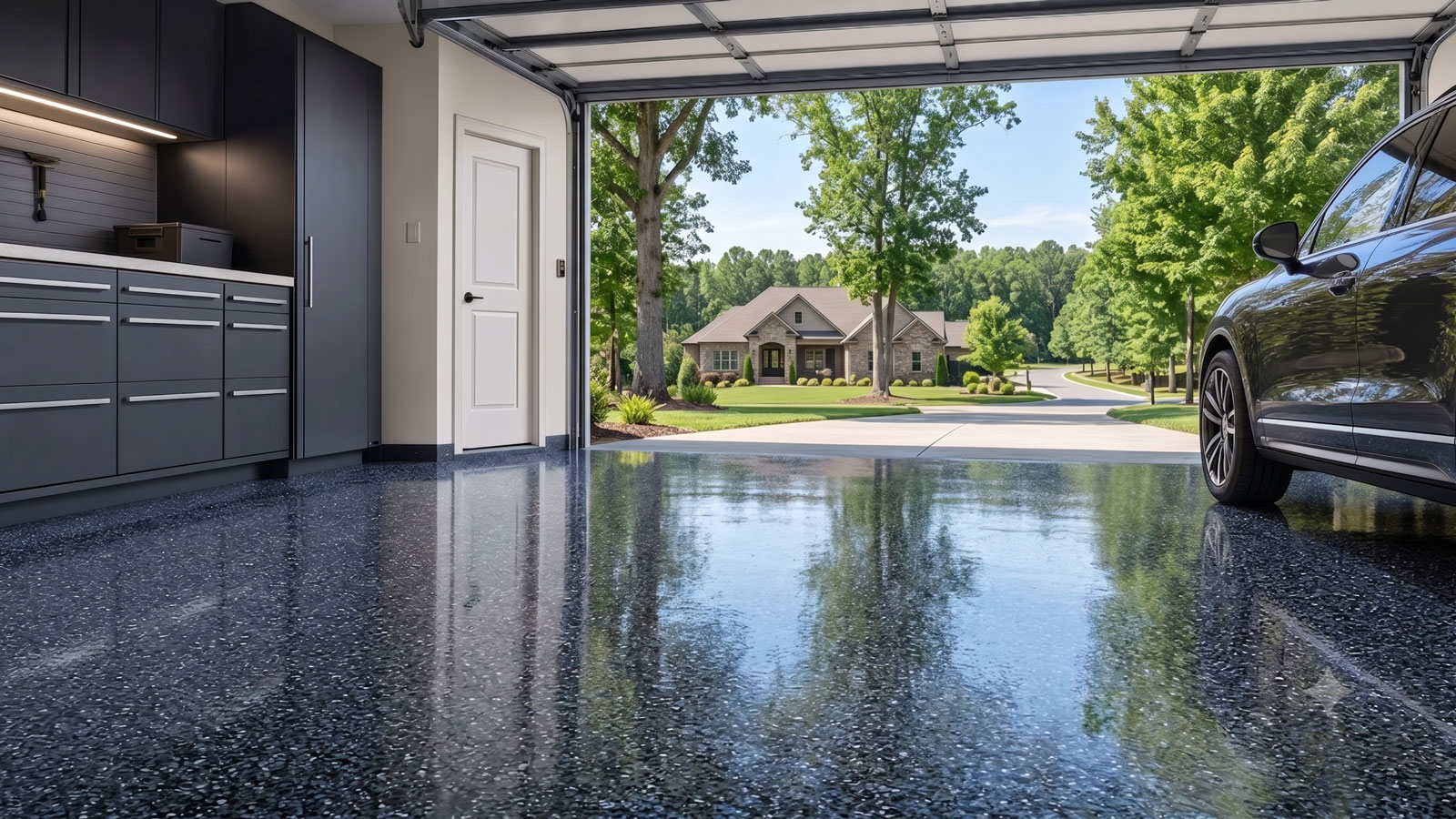
Garage Floor Coating for the Washington DC Metro Area
Garage coating guidance for homeowners across the broader Washington DC and Northern Virginia service territory. Epoxy, polyaspartic, and decorative flake finishes.
Floor Coating Services in Washington, DC
Washington, DC garages occupy a different built landscape from Ashburn's suburban two-car bays. The District's Comprehensive Plan was amended in 2021 and divides planning into area elements that distinguish Rock Creek West, Rock Creek East, Central Washington, Capitol Hill and the Anacostia waterfront. An older rowhouse may have a rear alley garage, parking pad or later concrete replacement rather than an original attached floor. A more recent parking structure has a different surface and joint history. Garage square footage alone misses the preparation and access differences.
DC's drainage context is similarly uneven. Rock Creek and the Anacostia River are major urban waterways, yet a watershed boundary does not determine whether any particular garage is wet. An alley that slopes toward a rear overhead door can bring runoff from surrounding pavement; another garage may have no exterior-entry problem but a previous coating that is peeling. Check the actual drains, threshold grade and persistent floor dampness independently.
Epoxy, polyaspartic and decorative flake can simplify cleaning when concrete is sound and properly prepared. For a DC property, the first questions should concern legal vehicle access for grinding equipment, old coatings, oil, joints and where cars can park during curing. A decorative topcoat cannot repair drainage, active structural movement or unsuitable concrete.
Local Market Insight
The District's Comprehensive Plan uses distinct geographic area elements including Rock Creek, Capitol Hill and the Anacostia waterfront. Rowhouse alleys and redevelopment parking structures therefore raise different equipment, construction and water-entry questions than suburban attached garages.
What Affects the Cost of Garage Floor Coating in Washington, DC?
An alley-accessible rowhouse garage may demand careful staging, old coating removal and doorway-edge grinding; a later residential parking bay can have curing sealer or moving joints. The quote should distinguish these preparations rather than treat all square footage as equivalent.
DC river and stormwater planning is public context, not a moisture test. Water under an alley door, vapor within concrete and ordinary wet-car puddles should be identified separately before choosing coating layers.
- Rowhouse and replacement slab history: Rear garages, parking pads and newer attached structures may have different pours and repairs. Ask when the actual floor was placed or patched and whether the space is enclosed and suitable for the coating.
- Existing paint and automotive residue: Older city garages can contain old floor paint, oil and repair compounds. Grinding, film stripping and removal of unsuitable material may be more important than the decorative system's material cost.
- Alley drainage and water marks: An alley can direct runoff toward a rear door, but DC's watershed map does not diagnose a garage. Trace grades, blocked drains and old threshold stains separately from any internal slab moisture.
- Joint and edge complexity: Repairs beside an old rear doorway, construction joints and raised transitions should be treated by observed stability. A flexible joint should not be disguised as a patched crack.
- Equipment delivery and parking: Limited alley clearance, neighboring driveways and work hours may affect grinder movement, waste collection and where a vehicle can be left during cure. Confirm the practical staging plan.
- Traction and return to use: Urban garages receive tracked rainwater, winter grime and grit. Choose an appropriate texture and request product-specific ambient limits, layered system details and safe vehicle-return timing.
Call for a clear, project-specific estimate — or request one online.
Rowhouse Alleys, DC Redevelopment and Actual Garage Construction
The District's Comprehensive Plan recognizes different neighborhoods through geographic area elements rather than treating the capital as a single type of building environment. Rock Creek residential areas, Capitol Hill rowhouse streets and Anacostia waterfront redevelopment each have different planning and construction contexts. The 2021 plan amendments provide policy direction, but they do not establish the age of a concrete floor behind a particular home.
In an older rowhouse block, a rear garage may have been reconstructed long after the front dwelling, or its floor may contain several coats of old paint. A recently converted parking space could have a replacement slab, patching, expansion joints and residual curing compounds. Inspect surface soundness, oil and previous coatings before promising that any resin system will adhere. House age is an unreliable shortcut for concrete preparation.
Access may present an unusually important cost difference in DC. Grinders and waste have to move through a safe, legal entry route; alley width, parked cars, steps and storage can affect labor. A bidder should inspect those conditions alongside the floor, defining the treatment of cracks, joints, edges and existing films in an itemized proposal.
Only after that review should a homeowner compare epoxy and polyaspartic systems or decorative flake blends. A attractive finish will not fix a weak patch or compensate for coating over failing paint. Ask whether the contractor can carry out the proposed surface profile and schedule under actual site conditions.
Rock Creek, Anacostia and Garage-Level Runoff in the District
Rock Creek and the Anacostia River are two important parts of the District's watershed geography, and the Comprehensive Plan includes separate planning for nearby neighborhoods. Those policies govern development and public infrastructure; they are not a report on water moving beneath a private slab. Local topography and the arrangement of adjacent paving matter more directly to a garage coating decision.
At a rear alley entrance, check whether street and alley pavement funnel rainfall into the garage, whether drainage structures are clear and whether the door threshold has recurring marks. Inspect old paint for blistering or concrete that stays damp after dry weather. Rain entering the opening, internal vapor and water deposited by tires are different concerns and require different evaluation.
Winter vehicles may also bring road salt, grit and meltwater into a garage that has never flooded. An intact continuous finish can simplify cleaning but does not remove the need to sweep abrasives or clear standing liquids. Texture matters when wet footwear reaches the floor.
Where runoff enters, correct grading or drainage first. Where slab moisture is suspected, determine suitability under the intended resin system before installing any finish. Specify decontamination, grinding, stable repairs, primer or base layers and topcoat, including the actual amount of time a car must remain outside. This is a useful way to apply DC's water geography without inventing damage at a specific address.
Frequently Asked Questions
Is a DC alley garage harder to coat than a suburban one?
It can be, because equipment delivery, vehicle staging, previous finishes and edge details differ. The concrete and access must be inspected; a rear garage is not automatically defective.
Does proximity to the Anacostia mean my floor contains moisture?
No. A watershed designation does not measure moisture in private concrete. Check actual drainage, doorway history, water marks and substrate conditions before deciding whether testing is warranted.
Can a coating stop rainwater running down an alley?
No. Water that flows under an overhead door needs separate drainage or threshold correction. An epoxy or polyaspartic finish is not floodproofing.
What belongs in a Washington, DC quote?
Ask for old paint and sealer removal, grinding, repairs, joints, entry edges, moisture checks when appropriate, complete coating layers, traction, and a workable alley equipment and parking plan.
How should an alley garage be maintained in winter?
Remove grit, road-salt residue and standing meltwater routinely. A sound coated surface can make cleanup easier, but it cannot replace drainage maintenance or regular cleaning.
Washington, DC Neighborhoods & Local Context
Phone Quote Line
Talk through the floor condition, coating options, and practical pricing range for your project.
(571) 500-4090Typical Project Cost
$3,000–$5,500
$3,000–$5,500 for a typical two-car garage. Final pricing depends on floor size, concrete condition, prep work, coating type, and finish options.
Other Service Areas